
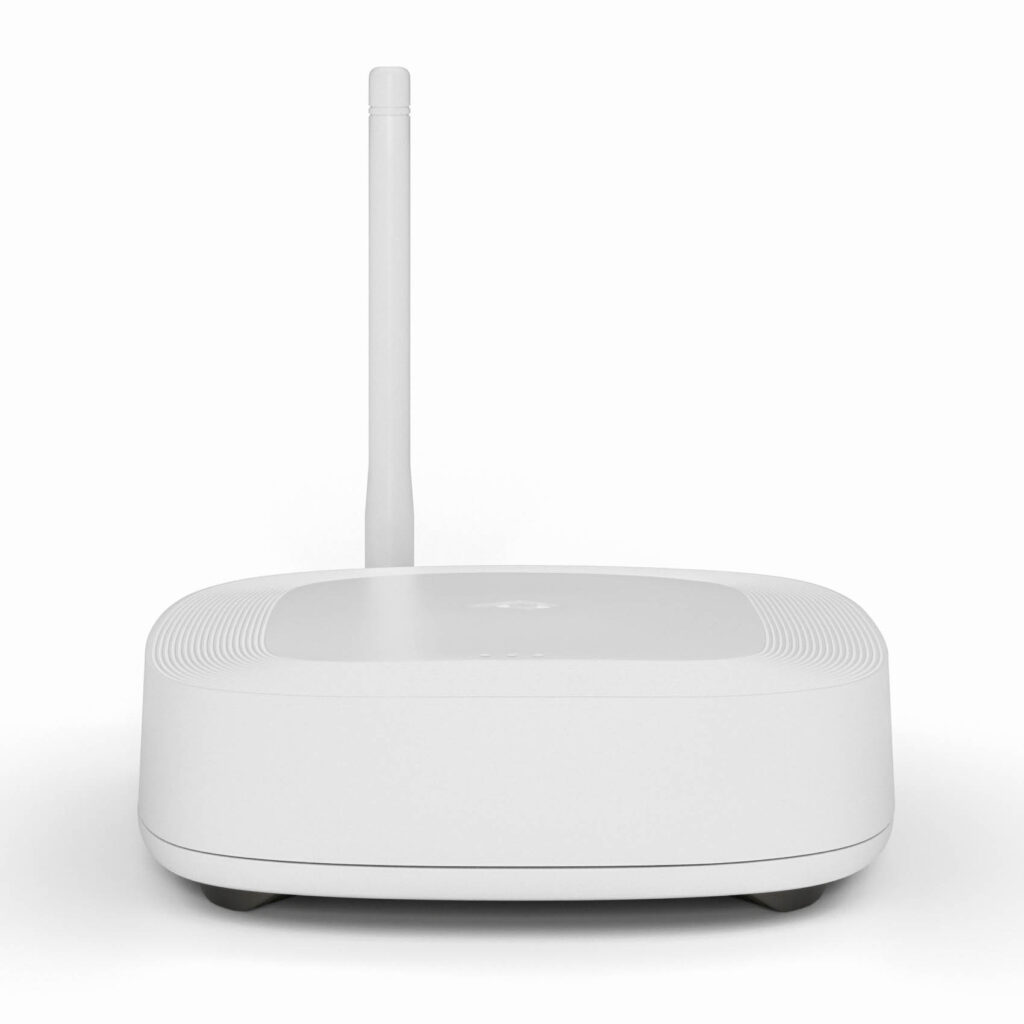
Pytronic’s intelligent energy management system, Homecore, is showing promising results from ongoing tests in Swedish single-family homes. By coordinating heat pump operation and electric vehicle charging, the system has been able to shift energy consumption to lower-cost hours while limiting household peak power demand. An analysis of four selected days shows 25–64% lower electricity costs compared with a modelled scenario without intelligent energy management.
Real-World Installation with Extensive Energy Monitoring
Homecore is designed to optimise energy consumption in single-family homes by coordinating several of the household’s largest electricity consumers. The system considers electricity prices, current household power demand and energy requirements to automatically schedule activities such as electric vehicle charging, heating and domestic hot water production.
In one of Pytronic’s test installations, the system has controlled a heat pump and an electric vehicle charger while monitoring the household’s energy consumption at 15-minute intervals.
The analysis covers four selected days in April, September and October 2026. Actual measured consumption was compared with a modelled reference scenario in which the same amount of energy was consumed, but without equivalent coordinated control.
64% Lower Electricity Costs with Homecore During One Test Day
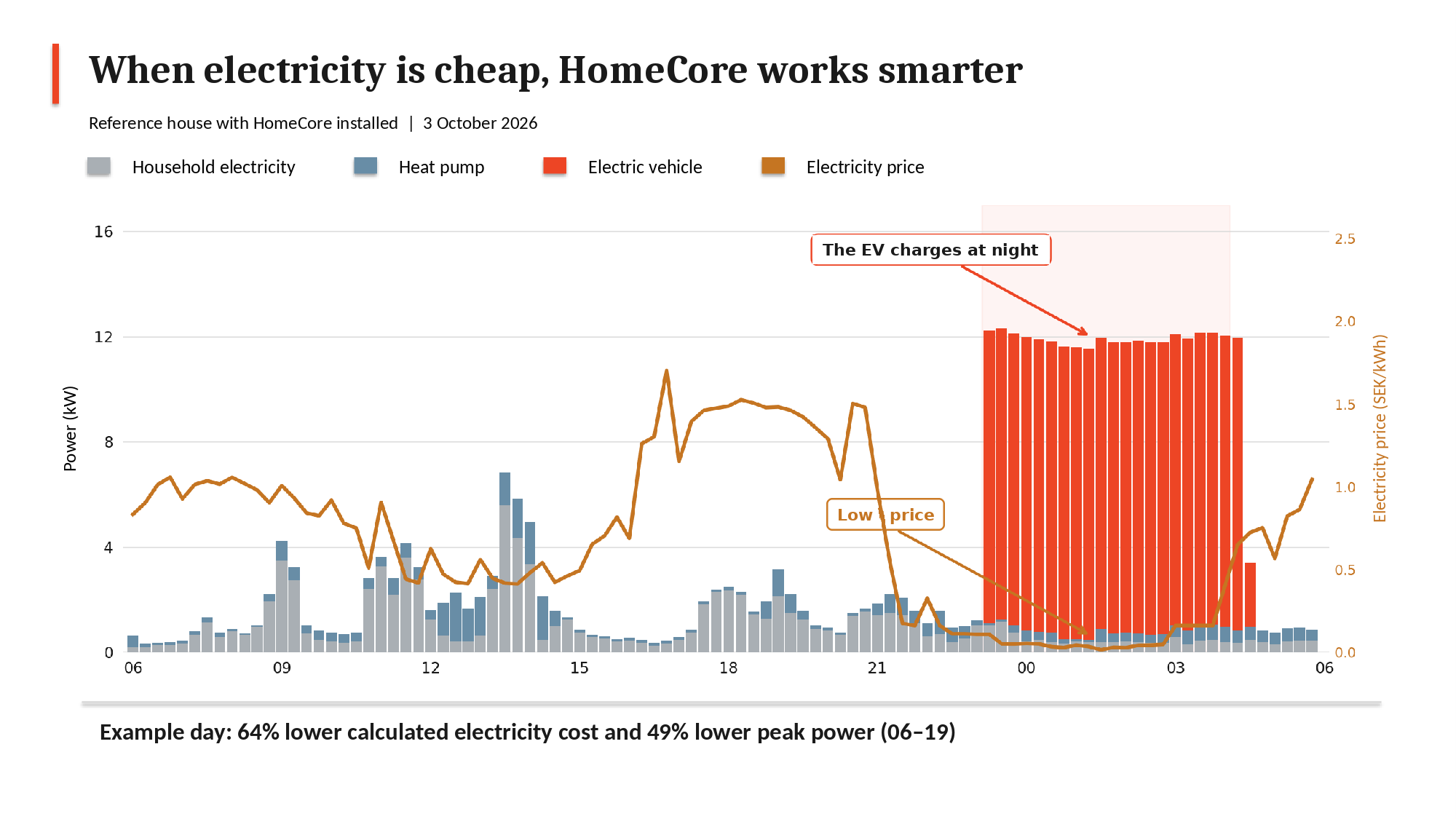
On 3 October, the household consumed a total of 94.1 kWh, of which 58.8 kWh was used for electric vehicle charging. Homecore scheduled the charging overnight, between 11:15 p.m. and 4:45 a.m., when electricity prices were more favourable.
The calculated electricity cost based on measured consumption was SEK 32. In the reference scenario, where the electric vehicle was instead assumed to begin charging at 5:30 p.m., the corresponding cost was SEK 89.50.
This represents a saving of SEK 57.40, or 64%, without reducing the household’s total energy consumption.
At the same time, the highest recorded power demand during the analysed daytime period was 6.8 kW, compared with 13.5 kW in the reference scenario. This corresponds to an approximately 50% reduction in the calculated peak power demand.
Consistent Results Across Multiple Test Days
Similar results were observed across four independently analysed days. The calculated cost reduction ranged from 25% to 64%, depending on electricity price fluctuations, household energy requirements and the amount of electric vehicle charging.
In total, electricity costs for the four days amounted to approximately SEK 158 with Homecore, compared with approximately SEK 307 in the reference scenarios without intelligent energy management.
The results demonstrate how coordinated energy management can create economic value by shifting flexible electricity consumption to more favourable periods.
Next Steps Towards a Broader Commercial Launch
For Pytronic, these results represent an important part of the ongoing work to validate Homecore’s savings potential across different types of installations and households.
“We are now seeing concrete examples of how Homecore optimises several major electricity consumers within a household. Our ambition is to make advanced energy management accessible to ordinary homeowners, without requiring them to monitor electricity prices or manually control their equipment,” says Hampus Oxenborg, CEO and Co-founder of Pytronic.
Homecore has been developed as a scalable infrastructure platform supporting integration with smart home devices, heat pumps, electric vehicle chargers, solar PV systems and batteries, among other technologies. Through local control and automated optimisation, the aim is to reduce household energy costs and contribute to more efficient utilisation of the electricity grid.
About the Calculations
The analysis is based on measured energy consumption with Homecore and modelled reference scenarios without coordinated control. The reference scenarios assume, among other things, that electric vehicle charging begins when the homeowner would typically return from work, as well as predefined schedules for domestic hot water production.
The cost calculations include spot electricity prices in Sweden’s SE3 bidding zone, an assumed 15% markup and VAT. Electricity network charges and energy taxes are excluded.
The measurements were conducted during spring and autumn. During the winter months, when heating demand and intraday electricity price differences are generally greater, savings are expected to be significantly higher.
Would You Like to Offer Your Customers Smarter Energy Management?
Do you work in residential development, energy services or product development and want to help your customers automatically reduce their energy costs, without having to think about when or how electricity is consumed?
Pytronic partners with companies looking to integrate intelligent energy management into their products, services and properties. Get in touch for an initial, no-obligation discussion about how Homecore could create value for both your business and your customers.
Hampus Oxenborg
CEO and Co-founder, Pytronic AB
Email: hampus.oxenborg@pytronic.com
Mobile: +46 70 091 27 75


